Traditional Marketing vs Digital Marketing: A Comprehensive Comparison
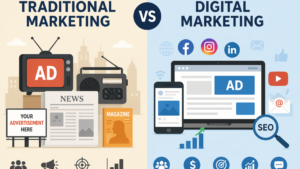
Traditional Marketing vs Digital Marketing refers to the comparison between two major marketing approaches that have shaped business growth over time. Marketing has always been the backbone of business growth, evolving alongside technology, consumer behavior, and communication channels. Over the decades, businesses have relied on traditional marketing methods such as print advertisements, billboards, television, and radio to reach their audiences. However, the rise of the internet and digital technologies has transformed the marketing landscape, giving birth to digital marketing—a dynamic, data-driven, and highly targeted approach. Understanding Traditional Marketing vs Digital Marketing is essential for businesses, marketers, and entrepreneurs who want to make informed decisions about where to invest their time, effort, and budget.
This blog explores both approaches in depth, highlighting their characteristics, advantages, disadvantages, and how they compare in today’s competitive environment.
cf highlights how marketing has evolved significantly over time, shifting from traditional methods to digital platforms. Traditional marketing includes channels such as television, radio, newspapers, billboards, and print advertisements. These methods have long been trusted for building brand awareness and reaching a broad audience. They are especially effective for local businesses and older demographics who rely more on offline media. However, traditional marketing often comes with high costs and limited ability to measure performance or target specific audiences precisely.
Traditional Marketing vs Digital Marketing refers to the comparison between two major marketing approaches used by businesses today. Traditional marketing refers to conventional methods of promoting products and services that have been used for decades. These methods rely on offline channels to communicate messages to a broad audience. Common examples include newspaper ads, magazines, brochures, billboards, direct mail, television commercials, and radio advertisements.
Traditional marketing is often characterized by one-way communication, where businesses broadcast their message to consumers without immediate interaction or feedback. For example, a television commercial reaches millions of viewers, but the audience cannot instantly respond or engage with the brand.
In the context of Traditional Marketing vs Digital Marketing, one of the biggest strengths of traditional marketing is its ability to build brand recognition and trust, especially among audiences who are less active online. Physical advertisements, such as billboards or print ads, can create a lasting impression and are often perceived as more credible. However, traditional marketing also has limitations. It is generally more expensive, less targeted, and harder to measure compared to digital marketing. Businesses may struggle to determine how effective a campaign is, as tracking customer responses is not always straightforward.
On the other hand, digital marketing uses online platforms like social media, search engines, email, and websites to promote products and services. It allows businesses to reach a global audience at a relatively lower cost. One of its biggest advantages is the ability to track and analyze performance in real time. Marketers can measure engagement, clicks, and conversions, making it easier to adjust strategies quickly. Additionally, digital marketing enables precise audience targeting based on interests, behavior, and demographics.
Another key difference lies in interaction. Traditional marketing is mostly one-way communication, where businesses deliver messages without immediate feedback. Digital marketing, however, is interactive, enabling direct communication between brands and consumers through comments, messages, and reviews. This helps build stronger relationships and improves customer engagement.
Despite the advantages of digital marketing, traditional marketing still holds value, especially for brand visibility and reaching audiences without internet access. Many successful businesses today adopt an integrated approach, combining both traditional and digital marketing strategies. This balanced method ensures wider reach, better engagement, and more effective overall marketing performance in an increasingly competitive marketplace.
What is Traditional Marketing?
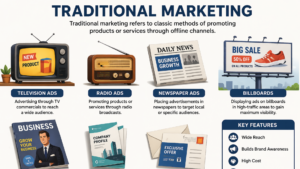
Traditional Marketing vs Digital Marketing refers to the comparison between two major marketing approaches used by businesses today. Traditional marketing refers to conventional methods of promoting products and services that have been used for decades. These methods rely on offline channels to communicate messages to a broad audience. Common examples include newspaper ads, magazines, brochures, billboards, direct mail, television commercials, and radio advertisements.
Traditional marketing is often characterized by one-way communication, where businesses broadcast their message to consumers without immediate interaction or feedback. For example, a television commercial reaches millions of viewers, but the audience cannot instantly respond or engage with the brand.
One of the biggest strengths of traditional marketing is its ability to build brand recognition and trust, especially among audiences who are less active online. Physical advertisements, such as billboards or print ads, can create a lasting impression and are often perceived as more credible. However, traditional marketing also has limitations. It is generally more expensive, less targeted, and harder to measure compared to digital marketing. Businesses may struggle to determine how effective a campaign is, as tracking customer responses is not always straightforward.
Traditional marketing and digital marketing each have their own strengths and limitations. While traditional marketing offers credibility and broad reach, digital marketing provides precision, flexibility, and measurable results.
The answer depends on the business, target audience, and marketing goals. Traditional marketing is still effective for building brand awareness and reaching offline audiences, while digital marketing excels in targeting, engagement, and measurable results.
In today’s world, many businesses adopt an integrated marketing approach that combines both traditional and digital strategies. For example, a company may use television ads to build brand awareness and digital marketing to drive online engagement and conversions. This combination allows businesses to leverage the strengths of both approaches and create a more comprehensive marketing strategy.
Ultimately, the most effective marketing strategy is one that adapts to changing trends, leverages available tools, and focuses on delivering value to the customer.
What is Digital Marketing?
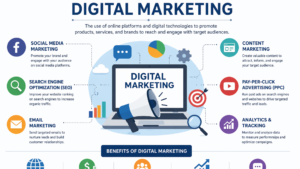
Digital marketing refers to the promotion of products and services using online platforms and digital technologies. This includes channels such as search engines, social media, email, websites, and mobile apps. Digital marketing enables businesses to connect with their audience in real time and engage in two-way communication.
Some of the most popular forms of digital marketing include search engine optimization (SEO), content marketing, social media marketing, email marketing, pay-per-click (PPC) advertising, and influencer marketing. These methods allow businesses to reach highly specific audiences based on demographics, interests, behavior, and location.
1. Communication Style
In the context of Traditional Marketing vs Digital Marketing, traditional marketing is primarily one-way communication. Businesses deliver their message to the audience without expecting immediate feedback. In contrast, digital marketing encourages two-way communication, allowing customers to interact with brands through comments, messages, reviews, and social media engagement.
This interactive nature of digital marketing helps build stronger relationships with customers and fosters brand loyalty.
2. Audience Targeting
Traditional marketing typically targets a broad audience. For example, a newspaper ad reaches all readers regardless of their interests or preferences. While this can increase visibility, it often results in wasted resources.
Digital marketing, on the other hand, offers precise targeting options. Businesses can tailor their campaigns to specific audiences based on age, gender, location, interests, and online behavior. This ensures that marketing efforts are directed toward people who are more likely to be interested in the product or service.
3. Cost and Budget
Traditional marketing methods are generally more expensive. Television commercials, print ads, and billboards require significant investment, making them less accessible to small businesses.
Digital marketing is more flexible and cost-effective. Businesses can start with a small budget and scale their campaigns as needed. Additionally, digital platforms often provide better return on investment (ROI) due to targeted advertising and measurable results.
4. Measurability and Analytics
Traditional Marketing vs Digital Marketing refers to the comparison between two major marketing approaches used by businesses today. Traditional marketing campaigns are less flexible. Once a print ad or billboard is published, making changes can be costly and time-consuming.
Digital marketing offers greater flexibility. Campaigns can be adjusted in real time based on performance data. Marketers can modify content, targeting, and budgets instantly to optimize results.
.
5. Reach and Accessibility
In the context of Traditional Marketing vs Digital Marketing, traditional marketing is often limited by geography. For example, a local newspaper ad may only reach readers in a specific area. Expanding reach requires additional investment.
Digital marketing has a global reach. With the internet, businesses can connect with audiences worldwide without significant additional costs. This is especially beneficial for e-commerce businesses and global brands.
6. Flexibility and Adaptability
Traditional Marketing vs Digital Marketing refers to the comparison between two major marketing approaches used by businesses today. Traditional marketing campaigns are less flexible. Once a print ad or billboard is published, making changes can be costly and time-consuming.
Digital marketing offers greater flexibility. Campaigns can be adjusted in real time based on performance data. Marketers can modify content, targeting, and budgets instantly to optimize results.
Disadvantages of Traditional Marketing
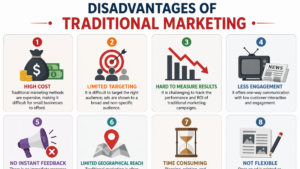
In the context of Traditional Marketing vs Digital Marketing, the main drawback of traditional marketing is its cost. High production and placement costs can make it inaccessible for smaller businesses. Furthermore, the lack of precise targeting can lead to wasted resources.
Another limitation in Traditional Marketing vs Digital Marketing is the difficulty in measuring results. Without accurate data, businesses may struggle to assess the effectiveness of their campaigns and make informed decisions.
Overall, Traditional Marketing vs Digital Marketing highlights how traditional methods face challenges in cost, targeting, and measurement, while digital approaches offer more efficiency and data-driven control.
Advantages of Digital Marketing
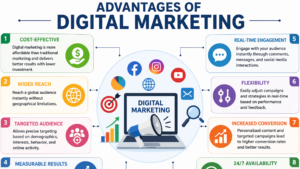
Digital marketing offers numerous advantages, including cost efficiency, precise targeting, and measurable results. It allows businesses to reach a wider audience and engage with customers in real time.
The ability to track performance and analyze data is a major benefit. Marketers can identify what works and what doesn’t, enabling continuous improvement and better ROI.
Digital marketing also supports personalization. Businesses can tailor their messages to individual customers, creating a more relevant and engaging experience.
Disadvantages of Digital Marketing
.Traditional Marketing vs Digital Marketing refers to the comparison between two major marketing approaches that have shaped business growth over time. Marketing has always been the backbone of business growth, evolving alongside technology, consumer behavior, and communication channels. Over the decades, businesses have relied on traditional marketing methods such as print advertisements, billboards, television, and radio to reach their audiences. However, the rise of the internet and digital technologies has transformed the marketing landscape, giving birth to digital marketing—a dynamic, data-driven, and highly targeted approach. Understanding Traditional Marketing vs Digital Marketing is essential for businesses, marketers, and entrepreneurs who want to make informed decisions about where to invest their time, effort, and budget.
This blog explores both approaches in depth, highlighting their characteristics, advantages, disadvantages, and how they compare in today’s competitive environment.
Marketing has evolved significantly over time, shifting from traditional methods to digital platforms. Traditional marketing includes channels such as television, radio, newspapers, billboards, and print advertisements. These methods have long been trusted for building brand awareness and reaching a broad audience. They are especially effective for local businesses and older demographics who rely more on offline media. However, traditional marketing often comes with high costs and limited ability to measure performance or target specific audiences precisely
.
Which is Better: Traditional or Digital Marketing?
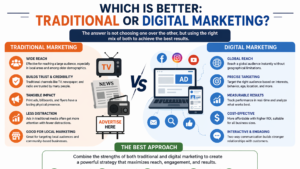
Traditional Marketing vs Digital Marketing refers to the comparison between two major marketing approaches used by businesses today. Traditional marketing and digital marketing each have their own strengths and limitations. While traditional marketing offers credibility and broad reach through offline channels like TV, radio, and print, digital marketing provides precision, flexibility, and measurable results using online platforms such as social media, search engines, and email.
The choice depends on the business, target audience, and marketing goals. Traditional marketing is still effective for building brand awareness and reaching offline audiences, while digital marketing excels in targeting, engagement, and measurable results.
In today’s world, many businesses adopt an integrated marketing approach that combines both strategies. For example, a company may use television ads to build brand awareness and digital campaigns to drive online engagement and conversions. This combination allows businesses to leverage the strengths of both approaches and create a more comprehensive marketing strategy.
Ultimately, the most effective marketing strategy is one that adapts to changing trends, leverages available tools, and focuses on delivering value to the customer.
.
Case Studies: How Brands Use Both Approaches
1. Integrated Launch Campaign
Traditional Marketing vs Digital Marketing refers to the comparison between two major marketing approaches used by businesses today. Traditional marketing campaigns are less flexible. Once a print ad or billboard is published, making changes can be costly and time-consuming.
Digital marketing offers greater flexibility. Campaigns can be adjusted in real time based on performance data. Marketers can modify content, targeting, and budgets instantly to optimize results.
2. Local Business Growth
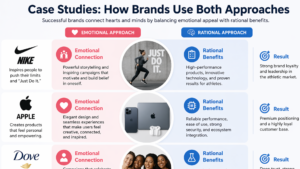
A small retail store can effectively use Traditional Marketing vs Digital Marketing strategies together to maximize reach. For example, it may distribute pamphlets and display banners in nearby areas as part of traditional marketing to attract local customers, while also building an active presence on social media platforms as part of digital marketing. By regularly posting offers, responding to customer reviews, and running location-based ads, the store can significantly increase both foot traffic and online inquiries.
3. Event Promotion
Traditional Marketing vs Digital Marketing refers to the comparison between two major marketing approaches used by businesses today. Traditional marketing campaigns are less flexible. Once a print ad or billboard is published, making changes can be costly and time-consuming.
Digital marketing offers greater flexibility. Campaigns can be adjusted in real time based on performance data. Marketers can modify content, targeting, and budgets instantly to optimize results.
.
Conclusion
Traditional Marketing vs Digital Marketing refers to the comparison between two major marketing approaches used by businesses today. Traditional marketing and digital marketing each have their own strengths and limitations. While traditional marketing offers credibility and broad reach through offline channels like TV, radio, and print media, digital marketing provides precision, flexibility, and measurable results using online platforms such as social media, search engines, and email marketing.
As technology continues to evolve, digital marketing is becoming increasingly dominant due to its cost-effectiveness and targeting capabilities. However, traditional marketing still plays an important role in building trust and reaching offline audiences in certain contexts. The key is to understand your audience, define your goals, and choose the right mix of strategies.
Ultimately, the most effective marketing strategy is not choosing one over the other, but integrating both approaches. By combining traditional and digital marketing, businesses can create impactful campaigns that increase visibility, engagement, and long-term growth.
Author: MOHAMMED MUSTHAFA